
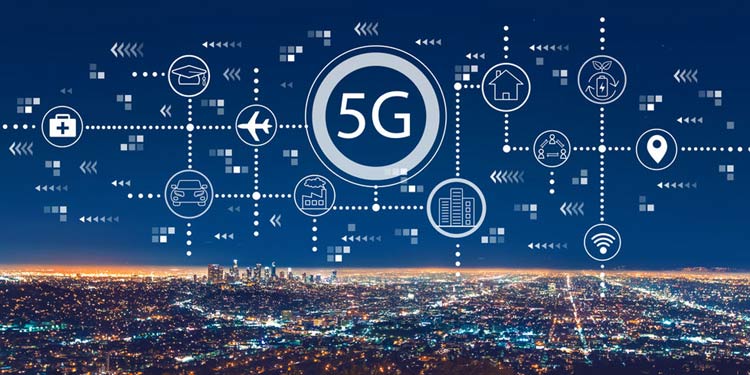
Internet of Things (IoT) + 5G Connectivity: A Perfect Match Powering the Future
Introduction: The Dawn of a Hyperconnected World
Imagine a world where your refrigerator orders groceries, your car talks to traffic lights, and your smartwatch monitors your health in real-time—all seamlessly connected without lag. This isn’t science fiction anymore; it’s the reality unfolding through the Internet of Things (IoT) and 5G connectivity.
The Internet of Things (IoT) refers to a network of physical objects—devices, vehicles, appliances, and more—embedded with sensors, software, and technology that allow them to connect and exchange data over the internet. Now, combine that with the lightning-fast, low-latency capabilities of 5G, and we get an entirely new level of digital intelligence.
Together, IoT and 5G are set to redefine industries, cities, healthcare, agriculture, and everyday life. This blog explores how this powerful duo works, its transformative impact, challenges, and what the future holds for our connected world.
1. Understanding the Internet of Things (IoT)
Before diving into 5G, let’s clarify what IoT truly means.
IoT is a massive network where “things” communicate—without human intervention. From smart thermostats and wearable devices to industrial robots and self-driving cars, IoT enables data-driven decisions and automation.
How IoT Works
Sensors/Devices: These collect data from their environment. For example, a temperature sensor in your home records room conditions.
Connectivity: Data is sent to the cloud using Wi-Fi, Bluetooth, cellular, or now, 5G.
Data Processing: Once in the cloud, software analyzes the data.
Action: The system triggers a response—like adjusting temperature or sending alerts.
Real-World Examples of IoT
Smart Homes: Devices like Alexa, Google Nest, or smart bulbs automate your environment.
Wearables: Fitness trackers monitor your heart rate, steps, and sleep patterns.
Smart Cities: Traffic management, streetlights, and waste disposal systems adapt in real-time.
Healthcare: Remote monitoring tools send patient data directly to doctors.
But IoT’s full potential has been limited—until now. That’s where 5G enters the scene.
2. What is 5G and Why It Matters for IoT
5G stands for the fifth generation of mobile network technology. It’s not just faster—it’s smarter, more efficient, and built for billions of connected devices.
Where 4G focused on faster downloads and better mobile experiences, 5G aims to connect everything—machines, sensors, and devices—instantly and reliably.
Key Features of 5G
Ultra-Low Latency: Reduces response times to as low as 1 millisecond. Perfect for real-time IoT operations like autonomous vehicles or remote surgery.
High-Speed Data Transfer: Speeds up to 100 times faster than 4G.
Massive Connectivity: Can connect 1 million devices per square kilometer, essential for IoT networks.
Energy Efficiency: Optimized for devices that run for years on battery power.
Improved Reliability: Consistent connections even in densely populated areas.
In essence, 5G is the missing link that makes large-scale IoT possible.
3. The Perfect Partnership: IoT + 5G
Think of IoT as the body and 5G as the nervous system. IoT collects data from billions of “body parts” (devices), while 5G instantly transfers that information to where it’s needed.
This partnership creates a dynamic ecosystem capable of real-time insights, predictive analytics, and automation across every sector.
How 5G Enhances IoT
IoT Challenge 5G Solution
Slow data transfer High-speed connectivity
Network congestion Massive device capacity
Delayed responses Ultra-low latency
Limited coverage Wide and stable network reach
High energy use Power-efficient protocols
With 5G, IoT systems can evolve from reactive to proactive—anticipating issues before they happen and optimizing processes automatically.
4. Key Industries Transformed by IoT and 5G
Let’s explore how this duo is reshaping major industries.
A. Smart Cities
Cities of the future will be living ecosystems of connected infrastructure.
Traffic Management: 5G enables real-time communication between vehicles, sensors, and lights to reduce congestion.
Public Safety: Surveillance systems can detect anomalies faster, improving emergency responses.
Utilities: Smart grids and meters ensure efficient energy distribution.
Waste Management: Sensors in bins signal when they need emptying, saving time and resources.
Example: In Seoul, South Korea, 5G-powered sensors monitor air pollution and traffic patterns, helping city planners respond instantly.
B. Healthcare
IoT-powered health devices have already revolutionized remote patient monitoring, but 5G takes it to another level.
Remote Surgery: Doctors can perform surgeries using robotic tools in real time.
Telemedicine: High-quality video consultations become more reliable.
Wearables: Constantly stream health data for analysis.
Ambulance Connectivity: Real-time data transfer to hospitals during emergencies.
Example: In China, 5G-enabled ambulances transmit vital data and video to doctors before the patient arrives, saving critical minutes.
C. Automotive and Transportation
The rise of autonomous vehicles (AVs) depends on instantaneous data exchange.
Vehicle-to-Vehicle (V2V) and Vehicle-to-Infrastructure (V2I) communication prevent accidents.
Smart Traffic Systems reduce jams and emissions.
Fleet Management improves efficiency with real-time tracking.
Example: 5G-connected cars in Germany communicate to avoid collisions, adjusting routes dynamically based on traffic updates.
D. Manufacturing and Industry 4.0
Factories are evolving into smart factories—connected, automated, and intelligent.
Predictive Maintenance: Machines report potential faults before they fail.
Remote Operations: Robots and AI systems managed in real-time.
Supply Chain Transparency: Sensors track goods from production to delivery.
Example: In Finland, 5G-enabled factories use autonomous robots and AR tools to streamline production and reduce downtime.
E. Agriculture
IoT and 5G help farmers manage resources and increase productivity.
Smart Irrigation: Sensors monitor soil moisture and weather to adjust watering.
Livestock Tracking: Wearable devices monitor animal health.
Drone Surveillance: 5G drones capture high-resolution field data for crop analysis.
Example: In India, 5G IoT systems help farmers monitor soil and crop conditions remotely, boosting yields sustainably.
F. Retail and Logistics
Retailers use IoT to personalize customer experiences and optimize operations.
Smart Shelves: Detect product shortages instantly.
Supply Chain Tracking: Real-time updates from warehouses to delivery.
In-Store Analytics: 5G cameras analyze shopping patterns.
Example: Amazon Go stores use IoT sensors and 5G connectivity for cashier-less, seamless shopping experiences.
5. Benefits of IoT + 5G Integration
1. Real-Time Decision Making
Instant data transfer means decisions can be made on the spot—critical for sectors like healthcare, transportation, and defense.
2. Greater Efficiency and Automation
IoT combined with 5G minimizes human intervention, reducing costs and errors.
3. Enhanced User Experience
Consumers enjoy faster, smarter, and more personalized services—from homes to offices to entertainment.
4. Improved Data Accuracy
More devices and better connectivity mean richer data sets for analytics and AI.
5. Economic Growth
According to market forecasts, IoT + 5G could add over $1.5 trillion to the global economy by 2030, creating millions of jobs.
6. Challenges and Concerns
Of course, this revolution isn’t without hurdles.
A. Data Privacy and Security
With billions of devices transmitting sensitive data, cybersecurity threats increase. Strong encryption and regulations are crucial.
B. Infrastructure Costs
Building 5G networks and deploying IoT sensors worldwide requires massive investment.
C. Interoperability
Different devices and standards can lead to compatibility issues across regions or manufacturers.
D. Energy Consumption
Although efficient, maintaining billions of devices still poses environmental concerns.
E. Digital Divide
Rural and developing regions might face delays in adopting 5G and IoT technologies due to cost and accessibility.
7. Future Outlook: What’s Next?
The IoT + 5G ecosystem is still in its early stages, but its trajectory is crystal clear—toward a fully connected, data-driven future.
A. Integration with AI and Edge Computing
Combining IoT + 5G + AI will enable autonomous decision-making. For example:
Drones inspecting power lines can analyze data on-site and act instantly.
Smart cities will use AI to predict traffic patterns.
B. 6G and Beyond
6G, expected around 2030, will push speeds and intelligence even further, integrating holographic communication and digital twins of physical systems.
C. Sustainable Smart Ecosystems
IoT and 5G will play a vital role in achieving carbon-neutral and energy-efficient systems, from smart grids to precision agriculture.
D. Rise of Personal IoT Networks
As costs fall, individuals will build personal IoT ecosystems—linking homes, vehicles, health devices, and workplaces seamlessly.
8. How Businesses Can Prepare
To stay competitive, companies should:
Adopt IoT Early: Start small—connect machines, logistics, or customer service systems.
Leverage 5G Solutions: Partner with telecom providers to explore 5G IoT pilots.
Invest in Cybersecurity: Protect devices, data, and networks from breaches.
Upskill Teams: Train employees in IoT data analytics, automation, and cloud computing.
Embrace Data Ethics: Maintain transparency and user trust.
Conclusion: Building a Smarter Tomorrow
The combination of Internet of Things (IoT) and 5G connectivity is more than a technological upgrade—it’s a revolution that’s reshaping the very fabric of modern life. From smarter cities to life-saving healthcare innovations and sustainable farming, this synergy represents the future of human progress.
As we move toward a hyperconnected world, one thing is certain: the fusion of IoT and 5G will empower people, businesses, and governments to make smarter, faster, and more sustainable decisions than ever before.